
Town halls
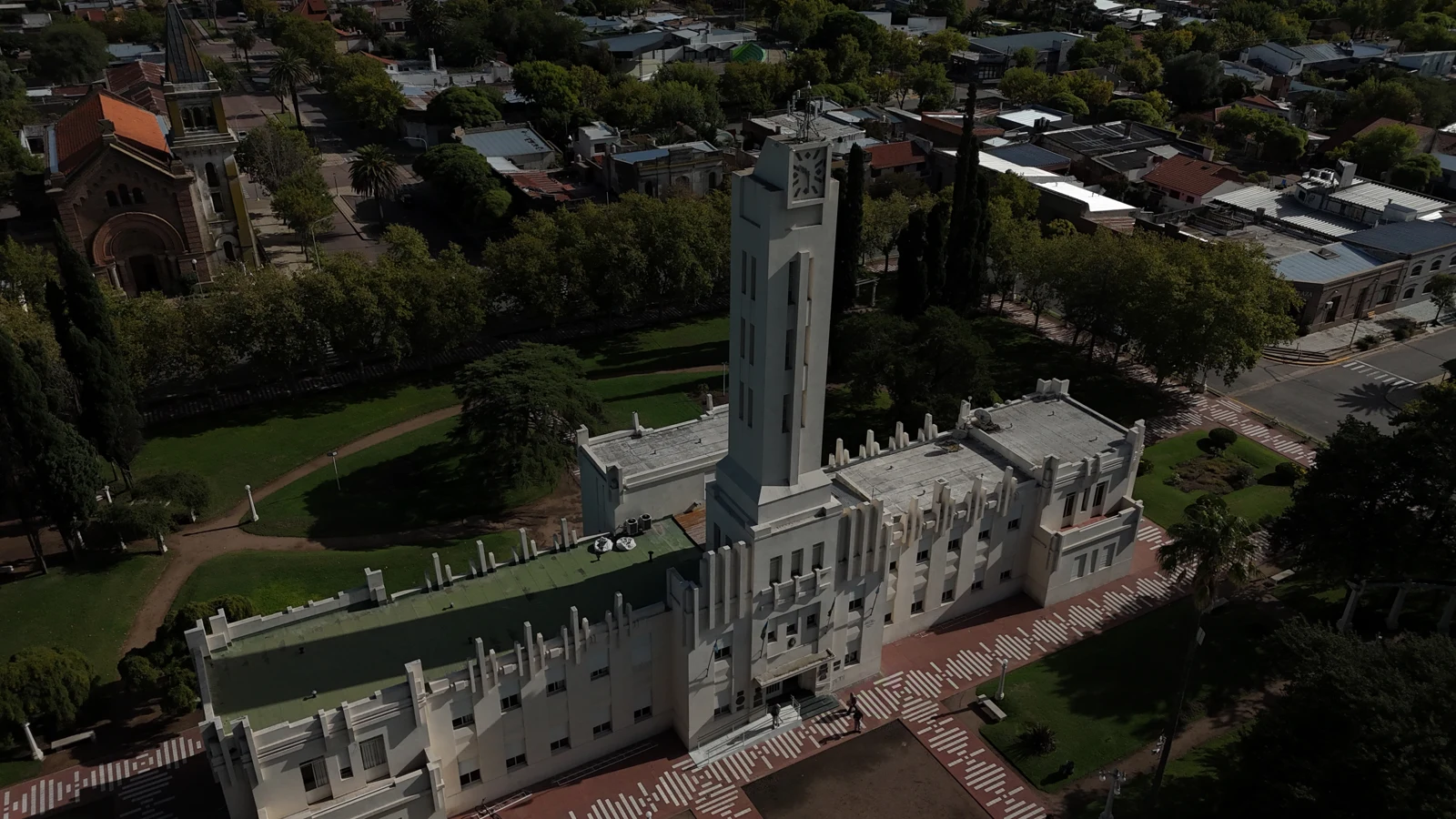
Towers, clocks and symmetrical façades make these buildings landmarks in their towns. This is Pellegrini Town Hall, photographed on Route 2.
HERITAGE AND MEMORY · OPEN ARCHIVE
Behind every monument are people, decisions and documents. Explore Francisco Salamone’s architecture through the communities and records that tell its story.
Explore the worksOur approach
We start with sources you can trace and distinguish documented facts from interpretations. We credit the people who research these places, live nearby and look after them.
See the sourcesArchitectural language
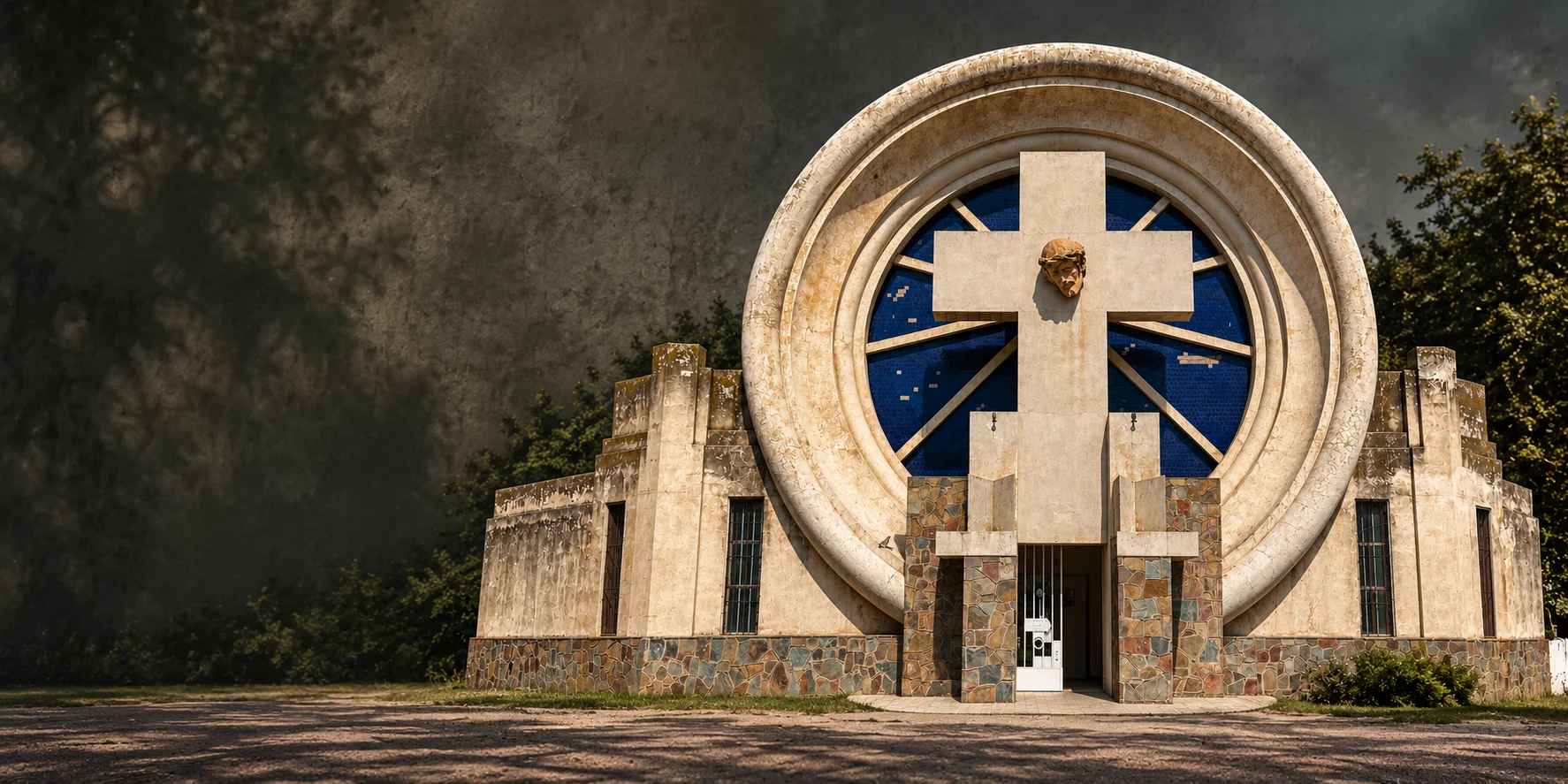
Salamone’s towers rise above the plains. At his cemetery gates, a familiar shape can take on an unexpected scale.
Between 1936 and 1940, the engineer and architect designed a remarkable series of public buildings in towns across Buenos Aires Province. He combined Art Deco, monumental forms and Futurist ideas with practical solutions for each building. In doing so, he developed a style of his own and changed the way people saw the role of the state in the towns around them.
Towers, clocks and symmetrical façades make these buildings landmarks in their towns. This is Pellegrini Town Hall, photographed on Route 2.
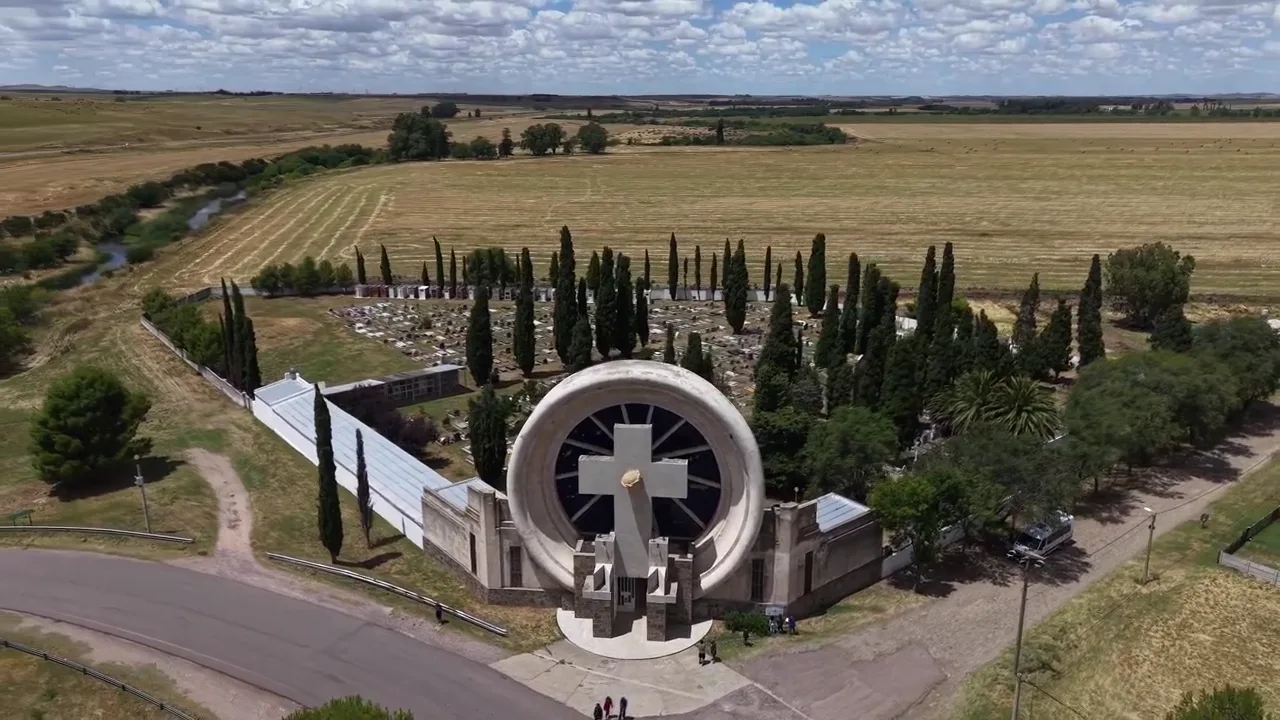
At the entrance to a cemetery, monumental gateways and symbolic figures shape the experience of passing from one space into another.
Explore the Saldungaray Cemetery Gateway · See the gateway from the air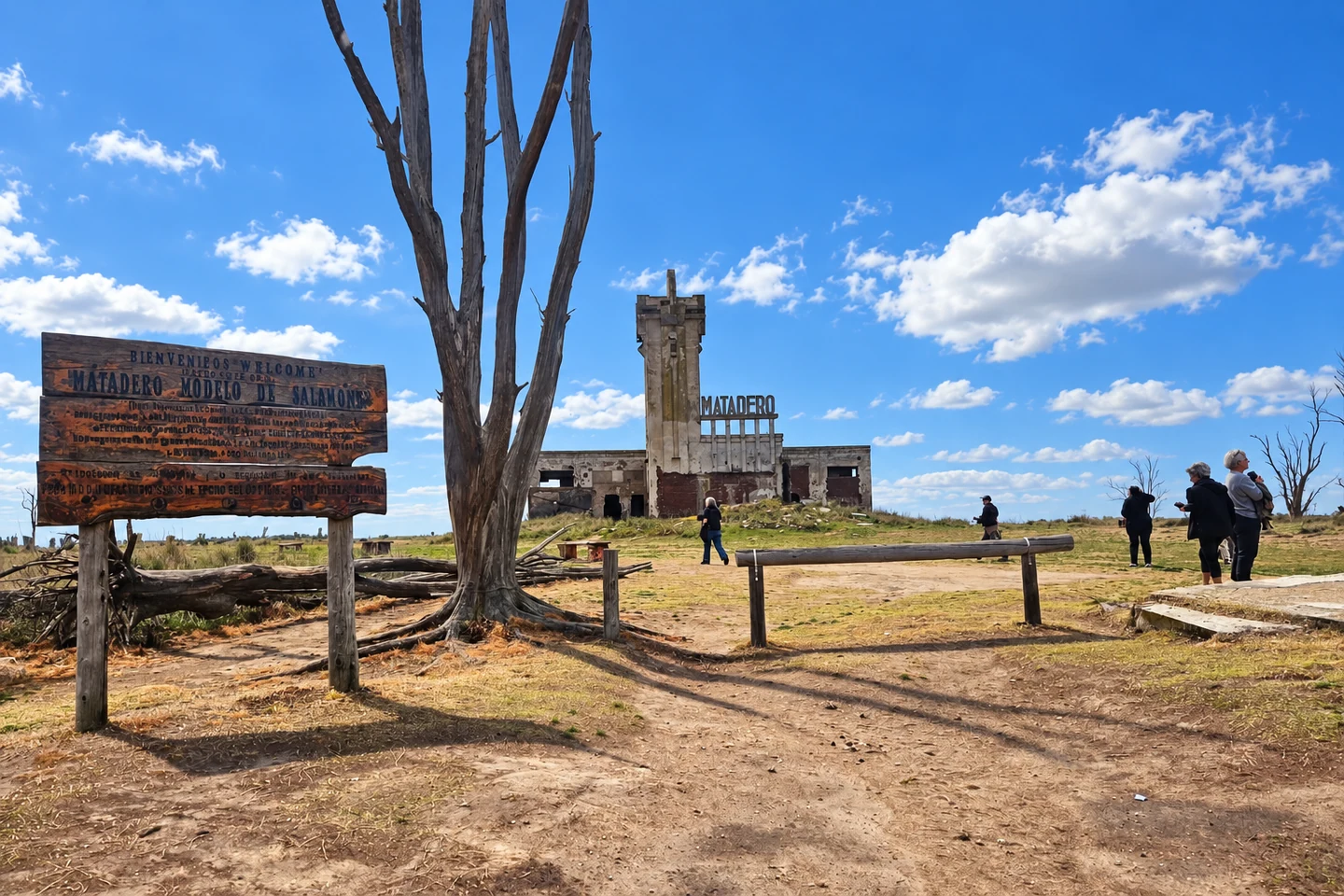
These industrial buildings combine practical layouts with an unmistakable silhouette. The photograph shows a former slaughterhouse on Route 2.
Heritage catalogue
A selection of buildings on our tours and other landmarks in Salamone’s career. It’s a starting point for exploring his work. Our destination guides show where each stop fits into the itinerary.
Town halls
Town halls
Town halls
Town halls
Town halls
Town halls
Cemetery gateways
Cemetery gateways
Cemetery gateways
Slaughterhouses and service buildings
Slaughterhouses and service buildings
Slaughterhouses and service buildings
Slaughterhouses and service buildings
Castles
Churches
Churches
Churches
Churches
No works match your search.
Six terms to help you recognise how buildings were designed and used. Some buildings on our routes are by architects other than Salamone.
Twentieth-century styles in art and architecture known for stylised forms, geometric patterns and sharply drawn decorative motifs.
A cemetery entrance with a design that can carry symbolic meaning alongside its practical purpose.
A building where animals were slaughtered and meat was inspected. Its layout also offers clues to the town’s working life.
The civic or administrative headquarters of a municipality. Its location and façade often make it a landmark on the town square.
The arrangement of buildings, entrances or paths around a main line that can emphasise symmetry and scale.
Places, objects and traditions that a community values for their history, social meaning, artistry or symbolism and wants to pass on to future generations.
To understand a building, look at how it has been used and altered, how it is cared for and what it means to its community. Explore the destinations on our tours.
This archive is a guide for travellers. We draw on national and provincial heritage records. Dates, figures and attributions need context, and researchers are still exploring aspects of Salamone’s life and style. The index includes buildings by other architects too.
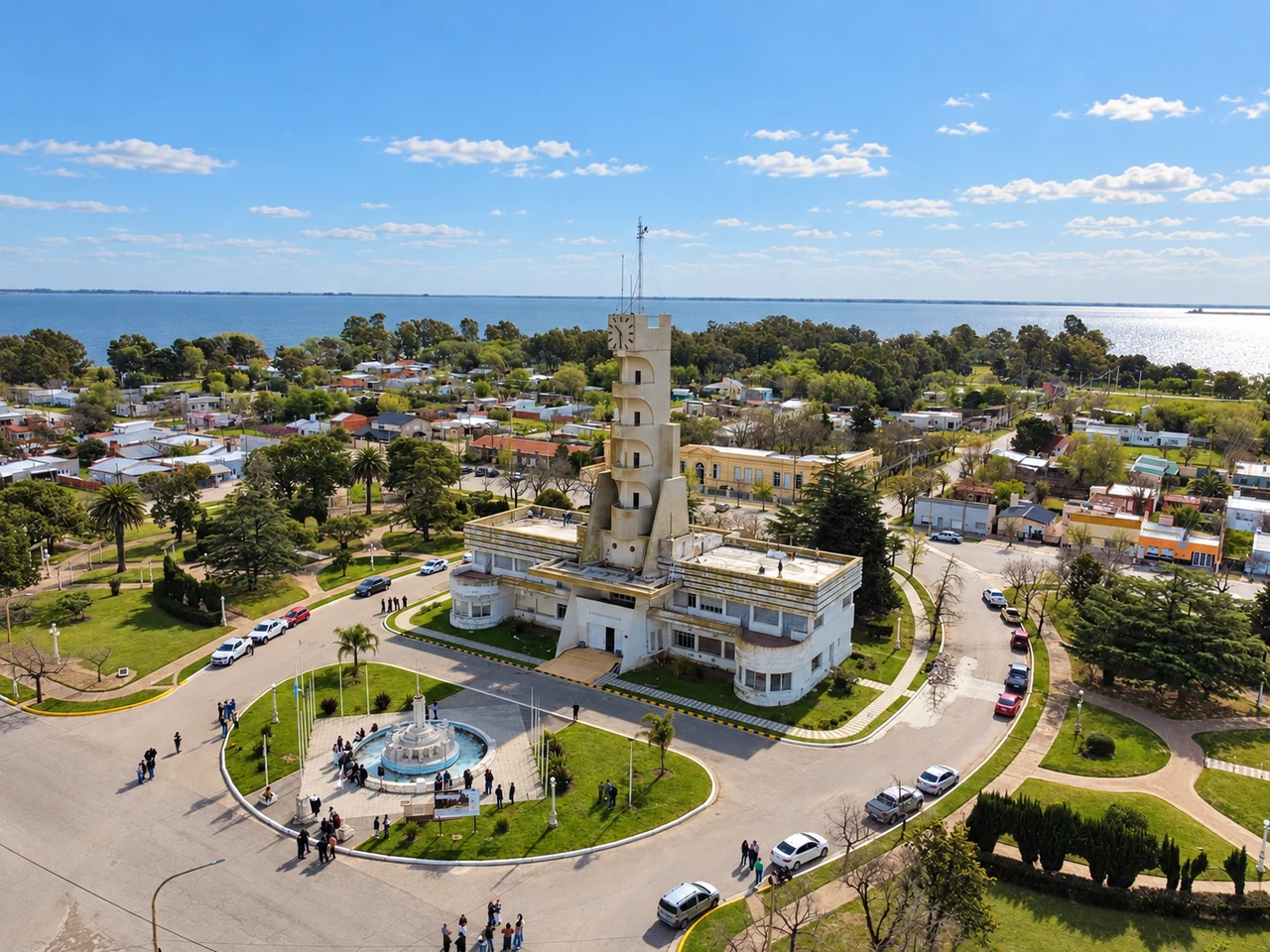
On , Buenos Aires Province announced the start of conservation work on the town hall, former slaughterhouse, Plaza Alsina and the ornamental fountain. The work forms part of the province’s heritage conservation programme. Plans include repairing façades, roofs, joinery and decorative features, conserving structures and interiors, and improving utilities, access and safety. Outside, the plans cover pavements, paths, planting, street furniture and architectural lighting, as well as bringing the fountain back into working order.
The announcement recorded the start of work. Check current access before visiting.
Julián Burgos and Juan Pablo Serna talk about tourism, culture and local identity on the Raigambre tour.
Listen to the interview on the Raigambre tour page (in Spanish)Raigambre explores the stories and meeting places of towns in Buenos Aires Province. Rediscover Mar del Plata takes a closer look at the city’s architecture, urban history and coastal landscape.
It’s easy to recognise a building’s value once it’s gone. Its best chance of survival lies with the people who know it and speak up for it.
Tell us about a place your community considers irreplaceable. Please include its name, its town and what it means to you.
You can review the message in WhatsApp before sending it.
Four tours explore the architecture, heritage and stories of Buenos Aires Province.
In south-eastern Buenos Aires Province, Francisco Salamone designed town halls on the scale of palaces and cemetery gateways that stand out against the open horizon.
3 days · Up to 15 travellers
Buenos Aires · Chascomús · Rauch · Azul
Our first stops are Chascomús, Rauch and Azul. Look for the bold geometry of the town halls and see how Salamone’s buildings shaped these towns.
Azul · Laprida · Adolfo Gonzales Chaves · Coronel Pringles
Across Azul, Laprida and Adolfo Gonzales Chaves, see how Salamone designed gateway monuments and whole civic ensembles. In Coronel Pringles, visit his Expressionist slaughterhouse.
Coronel Pringles · Saldungaray · Tornquist · Buenos Aires
From Coronel Pringles, travel to Saldungaray to see the great circular cemetery gateway with a cross at its centre. Stop in Tornquist for its monumental architecture before returning to Buenos Aires.
Planned accommodation. Two nights at Hotel Los Tilos, with stays in Azul and Coronel Pringles.
Times, visits and the order of stops may change. Please confirm dates, prices, transfers and booking terms with the team before you book.
Travel from Alberti to Carhué across the open pampas. Quiet squares and civic landmarks show how far Salamone’s building programme reached, while the ruins of Villa Epecuén tell the story of the flood.
3 days · Up to 15 travellers
Buenos Aires · Alberti · Vedia · Pellegrini
Leave Buenos Aires for Alberti to visit the town hall, square, school, park gateway and the cemetery’s unusual mortuary. After lunch, continue to Vedia’s town hall and square. Reach Pellegrini at sunset for a walk around the square and town hall, followed by dinner and an overnight stay.
Pellegrini · Tres Lomas · Salliqueló · Guaminí · Carhué
Visit the local government building, square and repurposed slaughterhouse in Tres Lomas. Continue to the cemetery and slaughterhouse in Salliqueló, then the town hall and slaughterhouse in Guaminí. Check in and have dinner in Carhué.
Carhué · Villa Epecuén · Buenos Aires
Visit Carhué’s town hall and former slaughterhouse in a landscape shaped by flooding. Take time at the thermal baths before returning to the city of Buenos Aires.
Planned accommodation. One night at Hotel El Bosque in Pellegrini and one at Epecuén Hotel Spa Termal in Epecuén.
Times, visits and the order of stops may change. Please confirm dates, prices, transfers and booking terms with the team before you book.
From Lobos to Puán, the stories of local families, the towns they built and the landscapes they settled offer a glimpse of how Buenos Aires Province came to be.
3 days · Up to 15 travellers, plus the tour team
Buenos Aires · Lobos · La Candelaria · Ernestina · 25 de Mayo
Walk through the historic centre of Lobos, taking in Plaza 1810, local memories of the Malvinas war, the town hall, Club Social Lobense, the church and Teatro Italiano. Then visit La Candelaria’s castle and grounds. In Ernestina, see Teatro Argentino, the Gothic Revival church, the former Enrique Keen school and the railway station. Stay overnight in 25 de Mayo.
25 de Mayo · Bolívar · Pirovano · Pigüé
In 25 de Mayo, visit Plaza Mitre, the town hall, church, Teatro Español, the Art Deco cemetery gateway and Laguna Mulitas. In Bolívar, see the town hall, Cine Avenida, Teatro Coliseo Español, Museo Florentino Ameghino and Parque Las Acollaradas. In Pirovano, visit the station and church for a glimpse of village life. Stay overnight in Pigüé.
Pigüé · Puán · Buenos Aires
In Pigüé, trace the area’s Indigenous roots and the legacy of the families who settled here from Aveyron in France. In Puán, visit the lagoon, island, Rómulo Franco’s house, the town hall and Santa Clara de Asís Monastery. End at the Templo Mirador Millennium on Cerro de la Paz before returning to the city of Buenos Aires.
Planned accommodation. Two nights in accommodation chosen for the route, the first in 25 de Mayo and the second in Pigüé.
Times, visits and the order of stops may change. Please confirm dates, prices, transfers and booking terms with the team before you book.
Beyond Mar del Plata’s summer beaches, discover a city of historic villas, modernist architecture and lively cultural venues, with lagoons and hills a short journey inland.
3 days · Up to 15 travellers
Casa del Puente · Villa Victoria · Villa Mitre · Torre Tanque · Villa Ortiz Basualdo · Chauvin
Visit Casa del Puente, Villa Victoria, Villa Mitre, Torre Tanque, Villa Ortiz Basualdo and Chauvin. Lunch at Torreón del Monje.
Laguna de los Padres · Jesuit mission ruins · Museo José Hernández · Sierra de los Padres
Visit Laguna de los Padres, the 1968 reconstruction of the Pilar Jesuit Mission, Museo José Hernández and Sierra de los Padres. Enjoy a free afternoon, a city tour and dinner featuring contemporary cuisine at Maral Explanada in the César Pelli towers.
El Marquesado · Unidad Turística Chapadmalal · Parador Ariston · Costa & Pampa
Visit El Marquesado, the Chapadmalal tourist complex, Parador Ariston and Costa & Pampa. Finish with a farewell lunch at Restaurante Cantábrico.
Planned accommodation. Two nights at Hotel Konke in Mar del Plata. Optional spa access is available on day two.
Times, visits and the order of stops may change. Please confirm dates, prices, transfers and booking terms with the team before you book.